Amanda Piquet, MD, FAAN, discussed phase 2 data from a trial evaluating the CAR-T therapy mivocabtagene autoleucel for the treatment of stiff person syndrome.
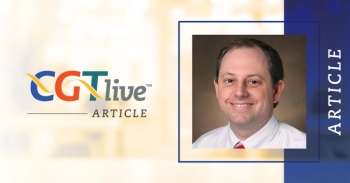
Srikanth Muppidi, MD, spoke about data from the KYSA-6 trial evaluating Kyverna's CAR-T mivocabtagene autoleucel in MG.
This interview was originally published on our sister site,
CD19-targeted chimeric antigen receptor T-cell (CAR-T) therapy has emerged as a potentially transformative approach in antibody-mediated autoimmune neurological diseases, including myasthenia gravis (MG). The underlying mechanistic premise involves achieving deep depletion of CD19-expressing B-cells through a single treatment course, with the aim of producing a lasting immune reset.
Mivocabtagene autoleucel (miv-cel; KYV-101; Kyverna Therapeutics) is an investigational autologous, fully humanized anti-CD19 CAR-T therapy currently in clinical evaluation for MG. Srikanth Muppidi, MD, a clinical professor of adult neurology at Stanford University and a specialist in neuromuscular disorders with a particular focus on MG, presented phase 2 findings from the KYSA-6 clinical trial (NCT06193889) at
CGTLive®’s sister site NeurologyLive® spoke with Muppidi on the conference floor to learn more about the KYSA-6 phase 2 data. He walked through both the clinical outcomes and mechanistic observations from the trial and described the design of a forthcoming phase 3 randomized trial.
Srikanth Muppidi, MD: I specialize in neuromuscular disorders, specifically MG. I had a presentation on the use of CAR-T therapy in MG. It's an exciting field for MG, with multiple presentations in advancing therapy in MG.
I was able to present the phase 2 data of the KYSA-6 study, which evaluated the CD19-targeted, fully humanized miv-cel product. In 7 patients, after one 1 of miv-cel therapy, we were able to show a robust and dramatic improvement in clinical symptoms and a reduction in Myasthenia Gravis Activities of Daily Living (MG-ADL) scores. Patients were able to tolerate this therapy, and there were no concerning safety signals.
CAR T-cell therapy promises a new innovation and a new way of thinking about treating autoimmune diseases, especially autoimmune diseases that have B-cells as the primary pathogenic process. The degree and the depth of improvement that we are seeing in patients could potentially translate to a completely life-changing way of dealing with the disease. We are at the leading edge of this new development, and it is very gratifying to see the kind of treatments that we are able to offer to patients with MG. I am quite optimistic that further studies will definitely consolidate the findings that we have and prove the concept that this is the way to treat refractory, difficult-to-treat patients.
Some of the unanswered questions that we have in the field are, for example, how long the benefit would last. We clearly know that 1 dose of CAR-T therapy clearly makes a big difference. We don't quite know how long the benefit lasts for. We are optimistic that it will be sustained for at least 1 or 2 years, if not longer—so that part has not been completely answered.
There are also different CAR-T targets being studied, and we certainly don't have any comparative data on that yet either. In addition, since CAR-T therapies are only recently being used in autoimmune diseases, we will need long-term follow-up for safety.
For miv-cel,, we are going to present our plan for a phase 3 clinical trial. This is going to be a randomized trial where patients will either get miv-cel or continue on the standard of care they are already on, with an opportunity to get miv-cel after 6 months. This will be the first randomized clinical trial for a DNA CAR-T with a blinded evaluator. The field is definitely moving toward trying to get approval for these therapies for autoimmune diseases, including MG—and for me, that is probably the most exciting thing.
In the phase 2 data, we were additionally able to show a very nice expansion of the CAR T-cells with B-cell reduction, and we were also able to show a clear reduction in antibody levels. But at the same time, protective antibodies against infections—especially viral infections and vaccination responses—remains robust. This raises the possibility that there is likely some type of immune reset that’s happening, because patients have a reduction in pathogenic antibodies, but not in the protective antibodies. We are hopeful that this will continue to replicate in the phase 3 trial.
Beyond miv-cel, I am optimistic for the field that CAR-T therapy certainly offers a new paradigm for how we would treat refractory antibody-mediated diseases. In many ways, neurology is at the forefront of this development, and I am excited for the field, for the faculty, and for the patients who are involved in these trials.
This transcript has been edited for clarity.