
Amanda Piquet, MD, FAAN, discussed phase 2 data from a trial evaluating the CAR-T therapy mivocabtagene autoleucel for the treatment of stiff person syndrome.
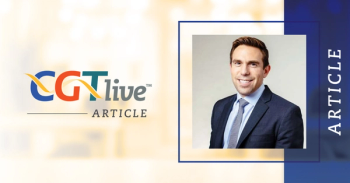
Jerel A. Banks, MD, PhD, the CEO of Benitec Biopharma, discussed data he presented at MDA's 2026 conference.
Benitec Biopharma’s BB-301, an investigational adeno-associated virus (AAV) vector-based silence and replace gene therapy, is currently being assessed for the treatment of oculopharyngeal muscular dystrophy (OPMD)-related dysphagia in a phase 1b/2a clinical trial (NCT06185673). Jerel A. Banks, MD, PhD, the chief executive officer and chairman of the board of Benitec, recently presented updated data from this study at
CGTLive® interviewed Banks on the floor of the conference to learn more about the findings. Banks gave some context regarding the study design, went over the key data points he presented and their big picture implications, and discussed future plans for the program.
Jerel A. Banks, MD, PhD: Benitec is developing a gene therapy, the first and only gene therapy for the treatment of swallowing difficulty in patients that have OPMD. We've been fortunate in the conduct of our first-in-human study and the presentation that we made at the conference was critical for a few reasons. We are developing a gene therapy, the objective is to improve swallowing, and we study swallowing using objective X-ray based methods. In the first 7 patients, we've seen very durable and clear responses in terms of their improvements, and specifically the presentation yesterday highlighted 2 features. One, the first patient that was treated reached the 2-year posttreatment time point, and even 2 years after therapy, we continued to see a deepening of their responses, meaning they felt less symptomatic, and they were able to swallow more effectively based on the X-ray results. Then secondly, we treated the first patient at the higher dose of our therapy, and what we observed was a very robust dose response, which gives us even more confidence that the drug can have a disease-modifying effect.
Maybe the most important part to start with is the high dose data. We've treated 6 patients as the low dose. There's been very benign safety, and so we felt comfortable moving to a dose that was 50% higher. What we measure in these patients is their symptom burden. They report their symptoms on a validated questionnaire called the Sydney Swallow Questionnaire. Then, equally importantly, they sit for X-ray-based studies of swallowing. What we look at, to your question, is how well they close their throat and how well they empty food and liquid from their throat. What we saw at the high dose in terms of throat closure and throat emptying was between 2 and a half times better at the high dose, all the way up to 30 times better—so the patients were able to close their throats about 2 and a half times better at the high dose, and in terms of emptying food or liquid postswallow from the throat, the benefits were up to 30 times better. When we pair these early results at the high dose with the durability data at the low dose, again, it makes us very confident that over time we'll continue to see improvements in those key features. The reason that that's important is patients with OPMD have progressive loss of swallowing function, and that predisposes them to a higher risk of aspirating or food falling into their airway, and that can be fatal.
There's never been a drug approved for the treatment of the dysphagic component of OPMD. Over the past 8 years, we've worked to develop this therapy. We've seen benign safety and clinically meaningful improvements in swallowing function. The 1 and 2 year data at the low dose give us strong evidence that the drug is improving swallowing in a durable and safe way, and the high dose data, while early, further supports our enthusiasm for the disease-modifying effect of the drug to improve the swallowing for patients with OPMD.
Absolutely, so on the back of this data, we plan to meet with the FDA in the middle of this year (mid-2026) to discuss a phase 3 or pivotal study. We anticipate the start of that phase 3 study in early 2027. Currently there's 1 clinical site open. We would anticipate opening at least 1 additional site, and we would expect that phase 3 study to report data in 2028. The biggest updates for us will be the outcome of the FDA meeting in the middle of this year, the disclosure of the phase 3 design and the new site(s) that are opened to facilitate enrollment into the study. We hope, obviously, to broaden out the evaluation of the therapy to other sites in the United States and potentially Canada and Europe, as well.
The only thing I would add is that we are very, very thankful to the patients and their families and to the clinical investigators that are conducting the study. This study requires a lot of visits, and the patients and their families have been very committed to the study, and we greatly appreciate that.
This transcript has been edited for clarity.
For more coverage of MDA 2026,