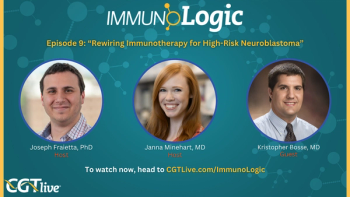
In episode 9 of ImmunoLogic, Kristopher Bosse, MD, and the cohosts discussed how immunotherapy is reshaping treatment for high-risk neuroblastoma.
The chairman of the Division of Pediatric Hematology & Oncology and BMT at Cleveland Clinic Children's discussed results from the phase 1/2 RUBY trial he presented at ASH 2025.
“This is really exciting to make sure that we have more options for our patients who are having severe complications from SCD.”
Although there are currently 2 FDA-approved gene therapy products available for sickle cell disease (SCD), namely Vertex Pharmaceuticals' and CRISPR Therapeutics’ gene editing therapy
At the conference, CGTLive® interviewed Rabi Hanna, MD, the chairman of the Division of Pediatric Hematology & Oncology and BMT at Cleveland Clinic Children's, who presented the data, to learn more about the findings and their implications. Hanna explained how the therapy functions, noting that it is intended to mimic naturally occurring mutations that produce elevated levels of fetal hemoglobin that contribute to a milder phenotype in some patients with SCD. He then went over the key results, highlighting that 38 of 40 treated patients were found to be pain-free at a median follow-up time of close to 13.5 months posttreatment. Hanna also discussed the safety findings, pointing out that there were no deaths on the study and that the safety profile of the treatment was consistent with the busulfan conditioning regimen used.
Hanna then discussed the potential of reni-cel in the current landscape of care for SCD and shared his thoughts on possible future advancements for the field. In particular, he expressed hope that a gene therapy treatment for SCD that does not require busulfan conditioning may eventually become available.
For more coverage of ASH 2025,