
















Chimeric antigen receptor (CAR)-T cells can re-expand in a lymphoma patient months after the initial infusion and can also be active against the patient’s cancer, according to a new study.
Chimeric antigen receptor (CAR)-T cells can re-expand in a lymphoma patient months after the initial infusion and can also be active against the patient’s cancer, according to a new study.

Shaji Kumar, MD, discusses his ixazomib maintenance trial, the latest FDA activity in myeloma, and the potential of chimeric antigen receptor (CAR) T-cell therapy in the field of myeloma.
A study on long-term remission of diffuse large B-cell lymphoma (DLBCL) shows that Kite Pharma’s anti-CD19 chimeric antigen receptor-T (CAR-T) cell treatment resulted in remission for up to 56 months.
Novartis’ chimeric antigen receptor T-cell (CAR-T) therapy for treating pediatric leukemia is on the cusp of being the first FDA-approved gene therapy, which will lead to new developments and utilizations of CAR-T therapy for treating other advanced blood cancers.
Results from the phase III Myeloma XI study showed that patients with myeloma had deeper responses after induction and after allo-stem cell transplantation with outpatient-delivered quadruplet therapy than with sequential immunomodulatory triplet combinations.
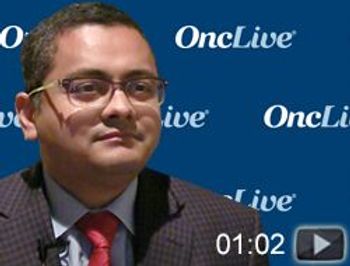
Saad Z. Usmani, MD, Department of Hematologic Oncology and Blood Disorders, Levine Cancer Institute/Carolinas HealthCare System, discusses CAR T-cell therapy in multiple myeloma.

Sarah Rutherford, MD, discusses rare DLBCL subtypes, ongoing research to improve outcomes for these patient populations, and the potential role of CAR T-cell therapy.
Sundar Jagannath, MD, director of the Multiple Myeloma program and professor of medicine at the Tisch Cancer Institute, Mount Sinai, discusses chimeric antigen receptor (CAR) T-cell therapy for patients with multiple myeloma.
Early results from a Chinese study showed that 33 of 35 patients (94%) with relapsed or refractory multiple myeloma experienced clinical remission after treatment with chimeric antigen receptor T cells targeting B-cell maturation protein.

Craig Portell, MD, of the University of Virginia Health System, highlights some of the latest and most exciting treatments in non-Hodgkin's lymphoma, including CAR-T therapies and targeted therapies such as venetoclax.

Ruben Niesvizky, MD, discusses some of the exciting advances, the potential of chimeric antigen receptor T-cell therapy, and emerging combination regimens on the horizon in multiple myeloma.
John P. Leonard, MD, associate dean of Clinical Research, interim chair of the Department of Medicine, Weill Cornell Medical College, Weill Cornell Medicine/NewYork-Presbyterian Hospital, discusses the emergence and potential of chimeric antigen receptor (CAR) T-cell therapy across hematologic malignancies.
Stephen M. Ansell, MD, PhD, discusses the potential of immunotherapy agents in lymphoma, ongoing clinical trials, and where this blends in with chimeric antigen receptor (CAR) T-cell therapy.

The FDA has granted a breakthrough therapy designation to tisagenlecleucel-T (CTL019) for use as a treatment for adult patients with relapsed/refractory diffuse large B-cell lymphoma after the failure of at least 2 prior therapies.

CAR-T cell treatment can have a number of side effects, with the most serious being cytokine release syndrome, according to David L. Porter, MD, of the University of Pennsylvania Health System. However, there are some promising therapies like interleukin-6 blockers that can reverse this reaction.
The flexibility of CAR T cells to perform multiple functions was associated with the level of clinical activity elicited for patients with advanced non-Hodgkin’s lymphoma, according to a retrospective analysis presented at the 2017 AACR Annual Meeting.

Results of a phase II trial showed that more than 80% of patients with refractory non-Hodgkin lymphoma achieved objective responses to treatment with the chimeric antigen receptor (CAR) T-cell therapy axicabtagene ciloleucel.
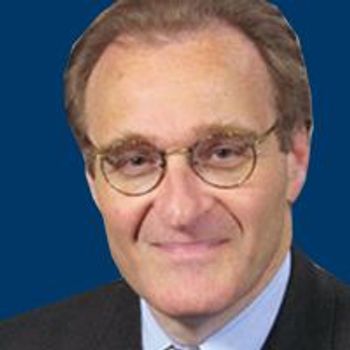
Leo I. Gordon MD, discusses results from the TRANSCEND trial and the next steps with chimeric antigen receptor T-cell therapy in non-Hodgkin lymphoma.
Median overall survival was not yet reached at a median follow-up of 8.7 months on the company’s ZUMA-1 trial.
Alfred L. Garfall, MD, MS, assistant professor of Medicine at the Hospital of the University of Pennsylvania, discusses CAR T-cells in acute lymphoblastic leukemia (ALL).
Fred Locke, MD, Moffitt Cancer Center discusses the interim results of the ZUMA-I trial of Kte-C19, a CAR T-cell therapy.
The European Commission has expanded the indication for lenalidomide (Revlimid) to include use as a maintenance therapy for patients with multiple myeloma following autologous hematopoietic stem cell transplant.
The FDA has approved lenalidomide as maintenance therapy in patients with multiple myeloma following autologous stem cell transplant.
The advance of CAR-T technology and the rise of immuno-oncology alongside emerging new payment models highlight the annual review in Evidence-Based Oncologyâ„¢, which looks at how researchers are harnessing the immune system to bring unprecedented results in cancer care.

The FDA has approved lenalidomide (Revlimid) as a maintenance therapy for patients with multiple myeloma following autologous hematopoietic stem cell transplant.