

CKO804 is being evaluated as an add-on therapy to ruxolitinib in patients whose disease had a suboptimal response to ruxolitinib alone.
CKO804 is being evaluated as an add-on therapy to ruxolitinib in patients whose disease had a suboptimal response to ruxolitinib alone.

Promising results were previously reported from a proof-of-concept study involving 8 patients.
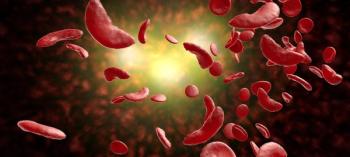
The first patient dosed in the study experienced a case of prolonged pancytopenia that has required ongoing transfusion and growth factor support.

Review top news and interview highlights from the week ending January 6, 2023.

The company is kicking off 2023 by announcing planned advancements for several gene therapies in its pipeline.

Initial data from the trials of HMI-103 and HMI-203 are expected in 2023.
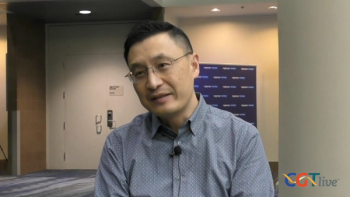
Ying Huang, chief executive officer, Legend Biotech, discussed new data from the CARTIFAN-1 and CARTITUDE-2 studies.
Allocetra previously demonstrated efficacy in a phase 1b trial for patients with sepsis.
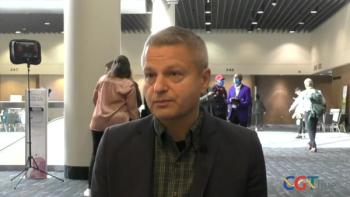
The associate professor of medicine from University of Pennsylvania discussed updated data on huCART19-IL18 presented at the ASH 2022 meeting.

Catch up on the latest news, breakthroughs, and announcements from biotechnology companies making advancements in cell and gene therapies.
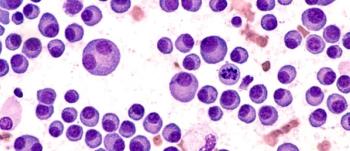
CT103A is currently being evaluated in multiple clinical trials in China.
The assistant member at St. Jude Children’s Research Hospital discussed updated data from a phase 1 study being conducted at the hospital.
The BALLI-01 study, initiated in 2019, has now dosed its first patient with an in-house manufactured CAR T-cell therapy candidate.
The company is seeking out other companies to continue development of its autologous CAR-T platform.

Updated data were presented at the ASH 2022 annual meeting.
The first year after treatment yielded statistically significant improvements in overall QOL and symptoms within the first year of treatment for relapsed/refractory large B-cell lymphoma
Second-line lisocabtagene maraleucel reduced the risk of an event occurring by 64.4% compared with standard-of-care chemoimmunotherapy induction and autologous stem cell transplantation.
Review some of our most-viewed coverage of advancements in cell therapies, including study data and clinical trial updates.

Annualized bleeding rates were superior with the gene therapy fidanacogene elaparvovec compared with factor IX treatment for patients with moderately severe to severe hemophilia B.

The CR was achieved at 1-month post-treatment.

Review some of our most-viewed coverage of advancements in gene therapies, including study data and clinical trial updates.

Crystal Mackall, MD, an Alliance for Cancer Gene Therapy scientist, is helping create a remote-control technology to personalize CAR T-cell therapy for each cancer patient.
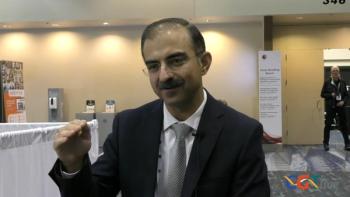
The associate professor of medicine at Siteman Cancer Center and WUSTL discussed updated data from a study of NT-I7 and tisa-cel presented at ASH 2022.
Review top news and interview highlights from the week ending December 23, 2022.
Both REGENXBIO and Rocket Pharmaceuticals have announced trial updates in their gene therapy programs for rare diseases.
Catch up on the latest news, breakthroughs, and announcements from biotechnology companies making advancements in cell and gene therapies.

Invectys and CTMC, a joint venture between MD Anderson Cancer Center and National Resilience, announced the therapy and collaboration in June 2022.
Patients had an ORR of 83.8% with a median DOR of 15.7 months in data presented at the ASH 2022 meeting.

No dose-limiting toxicities or treatment-related serious adverse events were reported among 24 treated patients.

With several newly approved therapies hitting the market and an overflowing pipeline, the FDA has stepped in to help keep the burgeoning world of biotech on track.