


Oncology
Latest News
Advertisement
Latest Videos







Advertisement
More News
The professor of medicine and University of Minnesota Medical School discussed the advantages and unmet needs of natural killer cells in oncology.
Catch up on the latest news, breakthroughs, and announcements from biotechnology companies making advancements in cell and gene therapies.
The research fellow from Harvard Medical School discussed blocking IFNg as a potential approach to reduce toxicities.
The instructor of Medicine, Division of Hematology and Oncology, Hospital of the University of Pennsylvania discussed his thoughts on the potential of targeting mutant KRAS with immunotherapy.
The associate professor at Fred Hutch Cancer Center discussed data presented at the EHA 2022 Congress.
Review top news and interview highlights from the week ending July 1, 2022.
The chief of cancer immunotherapy at Rutgers Cancer Institute discussed clinical results with different cell therapy approaches.
The scientist at A2 Biotherapeutics discussed the company’s dual-receptor Tmod technology.
Catch up on the latest news, breakthroughs, and announcements from biotechnology companies making advancements in cell and gene therapies.
The acting chief of the oncology branch of the Center for Biologics Evaluation and Research at the FDA discussed the evolution of cell therapies in the past decade.
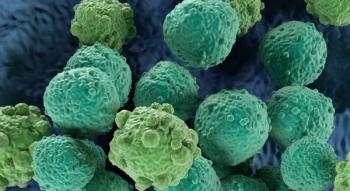
A clinical trial evaluating MB-106 in WM is planned under Mustang Bio's new IND.
The chief of the lymphoma division and oncologist at Levine Cancer Institute discussed data from real-world experience studies.

The approval builds off of liso-cel's (Breyanzi) previous indication for third-line or later treatment in LBCL.
Review top news and interview highlights from the week ending June 24, 2022.

The phase 1/2 OVATION 2 study is expected to complete enrollment by the third quarter of this year.
The clinical professor of medicine, Helen Diller Family Comprehensive Cancer Center, UCSF, discussed cilta-cel and upcoming cell therapies.
Catch up on the latest news, breakthroughs, and announcements from biotechnology companies making advancements in cell and gene therapies.
Long term survival was limited and all patients with B-cell acute lymphoblastic leukemia eventually relapsed.
Jennifer Buell, PhD, president and chief executive officer, MiNK Therapeutics, discussed different indications for the iNKT therapy AgenT-797.

The treated patient achieved an overall partial response of 72% in tumor regression.

ACE1831 will soon be evaluated in a phase 1, first-in-human, clinical trial.
Oncologist discuss the possibility of earlier-line CAR T-cell therapies in MM.
The director of the Center for Multiple Myeloma at Mass Gen discussed current CAR T-cell therapies in multiple myeloma.
A multisite phase 1 clinical trial for NT-I7 is underway in patients with relapsed/refractory large B-cell lymphoma.
Review top news and interview highlights from the week ending June 17, 2022.
Advertisement
Advertisement