A drop in endogenous Factor VIII expression was observed from treatment to 5-year follow-up despite continued demonstration of efficacy.
A drop in endogenous Factor VIII expression was observed from treatment to 5-year follow-up despite continued demonstration of efficacy.
Manuel Litchman, MD, the president, chief executive officer, and director of Mustang Bio discussed the company’s lead and second program.
The president, chief executive officer, and director of Mustang Bio discussed the company’s pipeline.
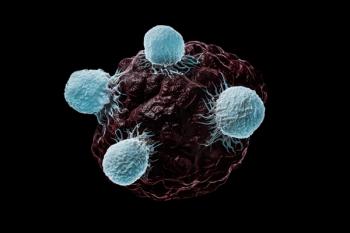
Findings from an ongoing phase 1 trial were presented at the 2021 ASGCT meeting.
The founder and chief executive officer of SQZ Biotech discussed the potential of their APC platform to treat a variety of tumors.
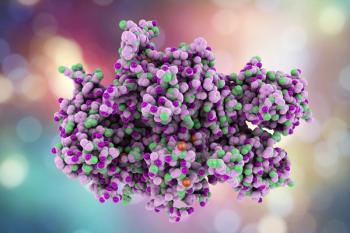
Over 90% participants had an annualized bleeding rate of 0 or a lower bleed rate than baseline after week 4 after treatment.
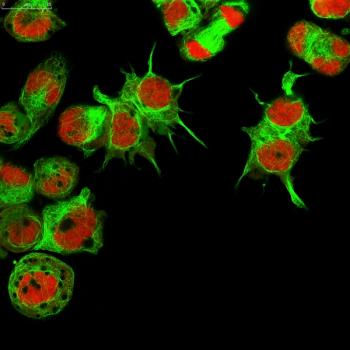
Early safety and efficacy data support the use of natural killer T (NKT) cells in patients with stage IV relapsed/refractory neuroblastoma.
The director of the Mario Lemieux Center for Blood Cancers at UPMC Hillman Cancer Center discussed strategies to manage AEs associated with CAR T therapy.
The founder and chief executive officer of SQZ Biotech discussed the development and advantages of their proprietary Cell Squeeze technology in creating cell therapies.

The CEO of Avamab Pharma discussed how funding and research changes directions.
The director of Clinical Research in Hematologic Malignancies at Levine Cancer Institute discussed overall response rate and stringent complete responses in the CARTITUDE-1 trial.
The director of the Mario Lemieux Center for Blood Cancers at UPMC Hillman Cancer Center discussed how the meeting sets the foundation for what’s to come in the treatment of multiple myeloma and other hematologic malignancies.

The CEO of Avamab Pharma discussed how the field of gene therapy has shifted due to the COVID-19 pandemic.
The head of neuroscience at Sangamo Therapeutics discussed advances in understanding disease biology that allow for more specific gene targeting.
The head of neuroscience at Sangamo Therapeutics discussed the potential of ZFPs in central nervous system disorders.
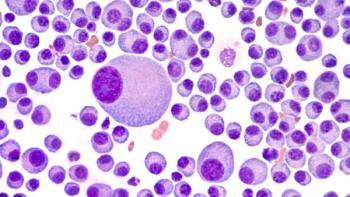
The recommendation comes after positive data was released from the recent phase 2 KarMMa trial.

Interim data from a phase 1 study from Intellia Therapeutics and Regeneron Pharmaceuticals is the first to support in vivo CRISPR genome editing in humans.
Philippe Moreau, MD, discussed the CARTITUDE-1 trial's promising results with ciltacabtagene autoleucel read out at the 2021 ASCO Annual Meeting.
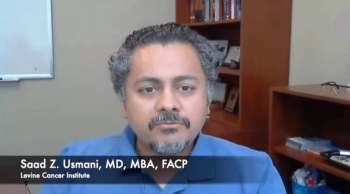
The director of Clinical Research in Hematologic Malignancies at Levine Cancer Institute discussed adverse events in the CARTITUDE-1 trial.
The chief executive officer of Gamida Cell discussed upcoming research on 2 of their investigational agents, GDA-201 and omidubicel, for hematological malignancies.

Flexion Therapeutics believes that local administration of a gene therapy may not only improve pain management but potentially slow disease progression.
The chief executive officer of Gamida Cell discussed the company's novel approach to cell proliferation.

C. Ola Landgren, MD, PhD, discussed the role of CAR T-cell therapies in multiple myeloma.
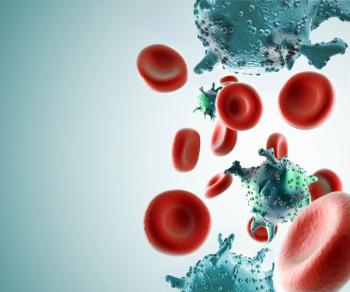
At the 18-month follow-up, the CAR T-cell therapy led to early, deep, and durable responses with a manageable safety profile in patients with relapsed/refractory multiple myeloma.
New studies into chimeric antigen receptor (CAR)–engineered natural killer (NK) cells has shown promising results, explained Ulrike Köhl, PhD, MD, professor of immune oncology and director of the Institute for Clinical Immunology at the University of Leipzig in Germany.
Neurologic adverse effect associated with CAR T-cell therapies like ciltacabtagene autoleucel can be managed without long-term lasting effects, as long as they are caught and treated promptly in patients with relapsed/refractory multiple myeloma.
Long-term efficacy assessment of brexucabtagene autoleucel demonstrated high rates of MRD negativity and CR rates in pediatric and adolescent patients with relapsed or refractory B-cell acute lymphoblastic leukemia.
Bispecific T-cell engagers and chimeric antigen receptor T-cell therapies seem destined to move into earlier lines of therapy for multiple myeloma (MM), speakers at the European Hematology Association 2021 Virtual Congress said.
Treatment with the CAR T-cell therapy ciltacabtagene autoleucel significantly improved outcomes for patients with relapsed or refractory multiple myeloma when compared with conventional therapies.
The autologous CAR T-cell product CART-ddBCMA was found to elicit a 100% objective response rate in patients with relapsed/refractory multiple myeloma, with deep and durable responses noted in those with poor prognostic factors.