
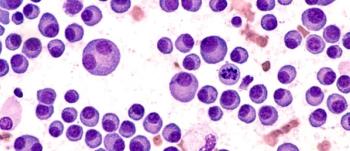
The long-term data comes from 2 cohorts in the phase 2 CARTITUDE-2 clinical trial.
The long-term data comes from 2 cohorts in the phase 2 CARTITUDE-2 clinical trial.
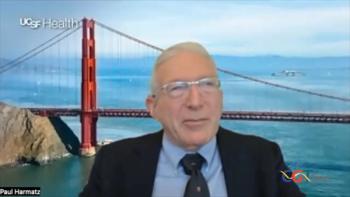
The pediatric gastroenterologist and professor in residence at University of California at San Francisco discussed the dose response seen with RGX-121.
The expanded donor Treg clones maintained lineage fidelity and were persistent through 1 year post-HCT.
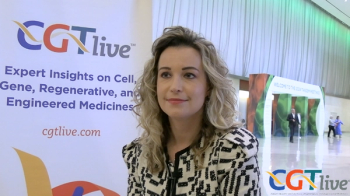
The hematology coordinator for pharmacy at Froedtert and the Medical College of Wisconsin discussed the advantages of each of the 2 modalities in the third and second line settings.
The data comes from an expanded access protocol (EAP; JCAR017-EAP-001) that included 96 patients in total who were treated with the nonconforming product.

The assistant professor dermatology at the Northwestern University Feinberg School of Medicine discussed how Vyjuvek’s approval changed the treatment landscape of DEB.
Juliane Gust, MD, PhD, an assistant professor of neurology at University of Washington, Seattle Children's, discussed a study that is currently underway via the NIH’s CARnation Consortium that will seek to address this gap in knowledge.
The transplant infectious diseases physician at Dana-Farber Cancer Institute discussed a case study she presented at the 2024 Tandem Meetings.
Chris McDonald, senior vice president and global head of technical operations, Kite Pharma, discussed the recent axi-cel manufacturing change approval.
The associate professor of medicine at Medical College of Wisconsin discussed clinical results from patients with CLL and Richter’s transformation treated with CD19/CD20-targeted CAR-T LV20.19.

Going forward, the dose for patients with CLL has been reduced to 1x10⁶ cells/kg.
The pediatric oncology pharmacist at Mayo Clinic discussed the incorporation of the recently FDA-approved gene therapies for SCD and TDT into the work of pharmacists.
Review top news and interview highlights from the week ending February 23, 2024.
Beleaguered company AlloVir has shut down the program before moving on to phase 2.
The medical director of Pediatric Hematology/Oncology at Sarah Cannon Research Institute discussed the pros and cons of potentially curative treatment options for SCD.

Differences between IEC and non-IEC post-relapse outcomes showed some significance in PFS but not in ORR.
The physician from St. Jude Children’s Research Hospital discussed the importance of involvement from patients and families while researching the long-term impact of CAR-T.
The researchers are continuing to investigate in vivo efficacy to pave the way to IND-enabling studies.
The assistant clinical director of the Center for Gene and Cellular Immunotherapy at Washington University in St. Louis discussed Atara Biotherapeutics' tabelecleucel and AlloVir’s posoleucel.
Patients with high bone marrow burden and CNS/non-CNS EMD were found to experience the worst OS and EFS outcomes.

Catch up on the latest news, breakthroughs, and announcements from biotechnology companies making advancements in cell and gene therapies.
The assistant professor of neurology at University of Washington, Seattle Children's discussed efforts to address a gap in knowledge in the long-term effects of CAR-T, if any, on children’s neurological development.
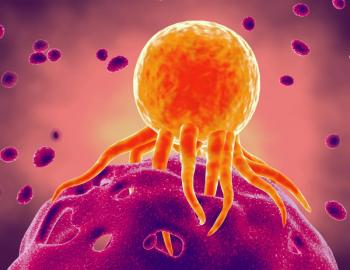
The ULBP6 target was discovered through 23andMe’s proprietary research platform of de-identified human genetic and phenotypic information.

Promising data on OriCAR-017 were previously published in the Lancet Haematology in 2023.

The founding president and chief executive officer of Parent Project Muscular Dystrophy discussed how far the field has come since founding the organization/

Funding from ACGT will help Chiocca perform FDA-required studies on mice to show the oncolytic virus is safe and can be manufactured for humans. It is the second such grant awarded to Chiocca from ACGT.
The assistant professor at Mayo Clinic School of Medicine discussed the design of the phase 1 trial.
The clinical research director of the UCSF Multiple Sclerosis Center also discussed the high expense of producing individualized therapies like CAR-T.
Peter A. Merkel, MD, MPH, the chief of the Division of Rheumatology and a professor of medicine and professor of epidemiology at Penn Medicine, discussed clinical trial design considerations for this emerging field.