























Lineage Cell Therapeutics CEO Brian Culley shares a clinical trial update on their leading cell therapy candidate and discusses the important role of the FDA as more players enter the cell and gene therapy space.
Lineage Cell Therapeutics CEO Brian Culley shares a clinical trial update on their leading cell therapy candidate and discusses the important role of the FDA as more players enter the cell and gene therapy space.

The single-injection investigative gene therapy may help with providing continuous expression of aflibercept.

The AAV8 vector–based gene therapy was associated with improvements in 2 measures of visual function.

A non-viral gene therapy sustained drug-delivery product that delivers anti-VEGF to the eye may replace the need for repeated intravitreal anti-VEGF injections and improve vision in patients with wet AMD.

Optical coherence tomography characteristics may be predictive of the efficacy of intravitreal injection of allogeneic human retinal progenitor cells, according to research presented at ARVO 2021.

Approach can unravel causes in MYOC and TBK1 glaucoma.

A patient enrolled in the phase 2 INFINITY trial exploring ADVM-022 for diabetic macular edema experienced a suspected unexpected serious adverse reaction, which has led to an unmasking of the study.
The CEO of Lineage Cell Therapeutics discusses their unique approach to addressing degenerative vision loss in dry age-related macular degeneration.

The gene therapy SAR439483 demonstrated promising early signs of activity in patients with Leber congenital amaurosis caused by biallelic mutations in GUCY2D.

Studies are uncovering a range of potential treatment options for disorders.

Physician offers patient counseling pearls for selected retinal diseases.

AAV2 TrkB-2A-mBDNF resulted in early signs of efficacy in preclinical studies of glaucoma and humanized tauopathy, which could be translatable to other neurodegenerative polygenic disorders.

The AAV-mediate gene therapy BS01 allowed 4 patients with retinitis pigmentosa who had complete or near-complete blindness to perceive light and motion.
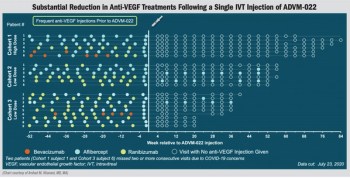
Investigators observe dramatic decrease in treatment burden seen in OPTIC study.

No approved treatment for leber hereditary optic neuropathy is currently available in the United States.
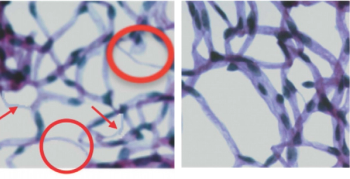
Study examining the role of IL-17A in patients with diabetes.
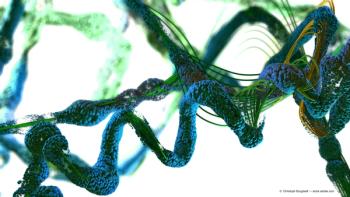
Investigators focus on biophysical method to study protein-protein interactions .

The researchers unexpectedly found sustained visual improvement in both eyes, despite only 1 eye being treated with AAV.
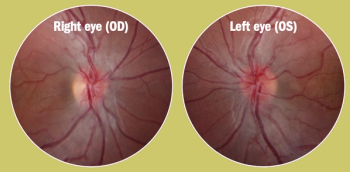
A new gene therapy for this patient population targets the ND4 gene mutation.

Two teams of researchers from Gyroscope Therapeutics and the University of Pennsylvania are joining forces to explore gene therapy targets for three specific serious eye diseases.

Lynn Hassman, MD, talks about a promising new technology that can optimize precision medicine in patients with uveitis.

The study presented at AAO provides an update on previously shared 6-month data from earlier this year.

In a longitudinal cohort study, researchers identified 17 seemingly novel variants of the PDE6A retinitis pigmentosa gene, suggesting it may be amenable to gene therapy.

Intravitreal gene therapy continues to be well tolerated and shows robust efficacy

Investigators find that nanoparticles deliver gene therapy successfully in mice, rats.